Snaking vs hydro jetting at a glance
Both tools clear a stopped drain, but they work on it in different ways. A snake, also called a drain cable or an auger, is a coiled steel cable that a hand crank or a motor spins down the pipe, and the head on its end bores through the clog or cuts it apart. A jetter feeds a hose down the line with a nozzle that sprays water at high pressure, scouring the pipe wall as it goes and washing what it loosens down the line.
| Snaking (drain cable) | Hydro jetting | |
|---|---|---|
| How it clears the line | Bores a path through the clog, or cuts it apart | Scours the pipe wall with water at high pressure and washes the debris down the line |
| What it can leave behind | Grease, scale or fine roots on the pipe wall around the path it cut | Less: it cleans the pipe wall all the way around |
| Usually suits | One stopped sink, tub, shower or toilet; hair, paper and soft clogs | Grease, scale, silt and roots; a main line that keeps stopping |
| Where it goes in | The fixture, its trap or a clean-out | Usually a clean-out, at a spot picked for the hose |
| On an older or cracked pipe | The cable can snag on a broken section | Lower pressure and a nozzle matched to the pipe |
What a drain snake does, and what it leaves
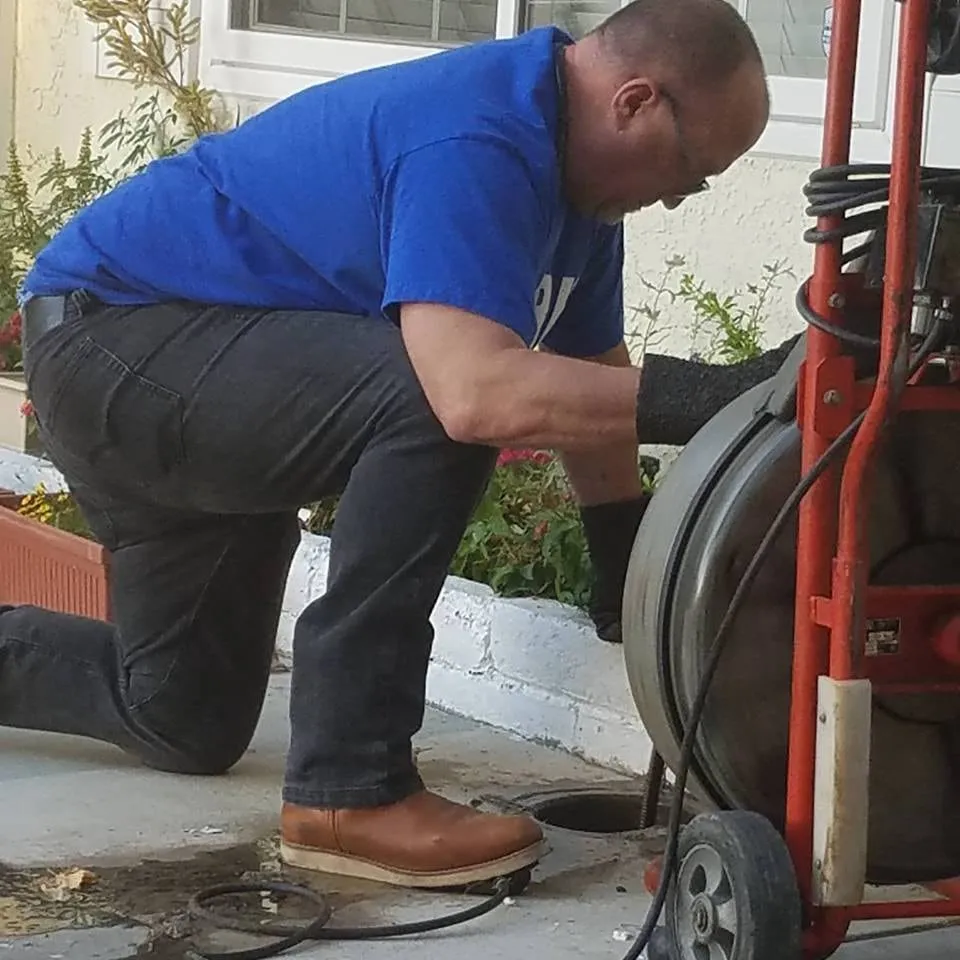
A snake is the everyday tool for a stopped drain. A small hand auger reaches a sink or tub trap, a closet auger is made for toilets, and a motor-driven machine with a longer, heavier cable is run from a clean-out to reach a main line. Its head either bores through the clog or cuts it apart, and some of what it catches comes back out with the cable.
That makes it quick and simple for a clog of hair, paper or soap, and it is usually where a single stopped fixture starts. Its limit is that it opens a path about the width of its head. Grease that coats a kitchen line, scale on the wall of an old cast iron pipe and roots that have grown in at a joint can stay on the wall around that path, where the next clog can catch on them. A line that stops again soon after it was cabled may be showing exactly that. The EPA’s fact sheet on sewer cleaning notes a similar limit for rodding, the sewer-sized version of a cable: it doesn’t remove sand or grit well, and may only loosen them to be flushed out later.
A cable still has a place in routine care, such as clearing a slow line through a clean-out before it stops completely.
What a jetter does that a snake can’t
A jetter works on the whole inside of the pipe. A pump sends water down a reinforced hose to a nozzle, and NASSCO, a sewer industry association that sets standards, points out that the pump only makes flow: the nozzle, by restricting that flow, makes the pressure. Pressure is the scouring force on the pipe wall that stirs debris loose, and flow is the volume of water that carries it away. Smaller pipes need more pressure and less flow; larger ones need more flow and less pressure. The EPA’s fact sheet on sewer cleaning describes jetting the same way: water at high velocity aimed at the pipe walls, removing debris and grease buildup, clearing blockages and cutting roots in small pipes.
Nozzles are made for different jobs, among them cutting grease, moving sand, punching through a blockage and cutting roots. In NASSCO’s guidance, a rotating nozzle suits grease, and a wedge-shaped nozzle with a forward jet suits punching through a blockage. With the right nozzle, jetting is usually the better choice for a kitchen line coated in grease, a main line that roots keep finding, a yard drain packed with silt, or old cast iron rough with scale.
Which one your drain needs
The symptoms usually point the way:
- One slow or stopped fixture. A sink, tub or toilet that stops on its own, while the rest of the house drains normally, usually has its clog close by, and a snake from the fixture or its trap is the usual fix.
- Several drains at once. Drains in two or more rooms slowing down at the same time usually put the clog in the main line, the pipe they all empty into. A first stoppage is often cleared with a cable from the clean-out; a main line that keeps stopping usually needs jetting.
- A kitchen line that keeps slowing down. Grease builds up along the pipe wall in layers. A cable opens the line for a while; jetting strips the grease off the wall.
- Roots. A cutting head on a cable or a root-cutting nozzle on a jetter clears roots from the joints. Roots tend to grow back where they got in, so a line that keeps getting them may need clearing on a schedule, and a camera shows whether they have cracked the pipe.
- Something solid went down. A toy or a tool in a toilet is better pulled back out than pushed deeper into the pipe: a cable or lifting the toilet can do that, and a jetter can’t.
- A line that stops right after it was cleared. That can point to a problem with the pipe itself, which neither tool fixes (more on that below).
Is hydro jetting safe for older pipes?
It can be, with care, because a jetter can be run gently. Its operator sets the pressure, flow and nozzle for the pipe in front of it, and NASSCO’s guidance for sewer crews spells out why that matters: an older deteriorated pipe might require lower pressure, or the pipe may be damaged, and clay pipe with severe cracking should be cleaned at lower pressure, with narrower nozzle angles, than concrete pipe in good condition. A very full line is cleared in stages, with several passes, or the debris dams up and the hose can get stuck.
That matters here. In the City of Santa Clarita, about half of the public sewer mains, 255 of roughly 500 miles, were laid between 1960 and 1979, and the city’s 2025 Sewer System Management Plan describes its sewer pipes as predominantly vitrified clay. The same plan expects cracks, joint separation and root intrusion to develop as those lines age. Whatever your own line is made of, its age and condition decide how it is cleaned, which is why it gets a look before the jetter goes in. Where a line may be cracked, a camera inspection shows the pipe before anyone decides how hard to clean it.
How the public sewer crews use both
The public sewers under the City of Santa Clarita’s streets get the same two treatments. LA County Public Works’ Consolidated Sewer Maintenance District looks after the city’s sewers, and the city’s 2025 Sewer System Management Plan sets out the routine:
- Sewer lines are cleaned by hydro jet or by rodding, which spins cutting blades through the pipe on steel rods, the sewer-sized relative of a snake.
- Lines known to collect grease, food waste from disposals or sand go on monthly, quarterly or semi-annual cleaning schedules.
- Lines prone to root growth are rodded or treated with chemicals from time to time.
Grease gets a program of its own in the plan, which reports that from 2021 to 2024, an average of 30% of the spills in the county sewer maintenance districts’ system were linked to grease buildup, and 18% to debris.
The house’s own sewer line, the lateral, is the property owner’s to look after: the city’s plan cites the county code section that makes property owners responsible for maintaining their house laterals, including fixing cracks and clearing tree roots and other debris. How far the owner’s part runs depends on the address, and the sewer line repair page sets it out under who owns the sewer lateral. A lateral that collects grease or roots is the same problem as a public main that does, on a smaller scale, and it calls for the same tools.
Drain cleaner vs a cable or a jetter
A chemical drain opener works only on what it can reach and dissolve. Poured into a drain that has stopped, it pools above the clog instead of flowing through it; a lost object or a broken pipe is beyond it; and when it fails, it is still in the line for the next person who opens the trap or runs a cable.
These products are hazardous to handle, too. MedlinePlus, the National Library of Medicine’s health site, lists lye, potassium hydroxide, sulfuric acid and hydrochloric acid among the poisonous ingredients of drain openers. It names burns to the skin and the eyes among the symptoms, and a splash into the eyes while one is being poured as one way people are hurt. Federal rules require child-resistant packaging for household products that contain lye or sulfuric acid at or above set strengths.
A snake or a jetter removes the clog without any of that, and a camera can show what caused it. If you have already poured a drain opener into a stopped drain, say so when you call, so whoever opens the line knows what is in it.
When the pipe itself is the problem
A cable or a jetter can only clear a pipe; neither one repairs it. If a line stops again soon after a cleaning, if water still stands in it once it has been cleared, or if roots keep coming back at the same joint, the pipe may be cracked, sagging or pulled apart at a joint. A camera inspection shows which. The cable or the jetter opens the line, and the camera shows what is left.
A cracked or broken sewer line is repaired rather than cleaned again, by replacing the damaged section or the whole run, and sewer line repair covers how that is done. The pipes that bring water into the house are a separate system with their own failures, and the guide to repair or repipe covers those.
How the shop decides
Plumbing by Kirk does both jobs: everyday drain cleaning and hydro jetting in Santa Clarita. A plumber comes out and finds the cause first, so whether a cable or a jetter fits is decided by what is in the line. You hear the price before work starts, and you decide.
To have a slow or stopped line looked at, call the shop.
Sources
5 cited
- NASSCO Tech Tips, flows versus pressures in sewer cleaning (April 2010) and understanding the science of jetting sewers (August 2016) (flow, pressure, nozzles, older and cracked pipe, crew safety), read October 13, 2026
- US Environmental Protection Agency, Collection Systems O&M Fact Sheet: Sewer Cleaning and Inspection, September 1999 (EPA 832-F-99-031, the copy posted by the Metropolitan Water Reclamation District of Greater Chicago; what rodding and jetting do), read October 13, 2026
- City of Santa Clarita, Sewer System Management Plan, May 2, 2025 (who maintains the city’s sewers, how they are cleaned, the causes of spills, the age and material of the mains, and the owner’s lateral), read October 13, 2026
- MedlinePlus, drain opener poisoning and drain cleaner poisoning (ingredients and burns), read October 13, 2026
- 16 CFR 1700.14, substances requiring special packaging (lye and sulfuric acid; section 1700.1 defines special packaging as packaging made significantly difficult for children under five to open), read October 13, 2026