What to do right now
A water heater leaking onto the floor can be made safe in four steps. Work through them in order, and keep skin and bare feet out of any water that came from the tank, because it can be hot enough to scald.
- Turn the heat off. On a gas heater, turn the gas control knob to off or to its pilot setting. On an electric heater, switch off its breaker at the panel, and don’t step into standing water to reach it.
- Close the cold-water valve. It sits on the cold pipe running into the heater, usually near the top of the tank. A wheel handle closes clockwise as far as it goes; a lever handle closes when it sits across the pipe.
- Protect the floor. Move boxes and anything that soaks up water, lay down towels and set a bucket under the drip. Take a few photos of the leak and the damage before you clean up.
- Find the source. The next chapter shows how, and the chapters after it say what each spot means.
Treat it as an emergency if water is spreading faster than you can catch it or the shut-off valve won’t close. Shut off the water to the whole house at the main valve, follow the first steps on the emergency plumbing page, and call the shop. Hot water or steam pouring from the relief valve is an emergency of its own, and the relief valve chapter says what is safe to do about it.
If you smell gas at any point, stop here. Get everyone out first, and don’t touch light switches or appliances on the way. Once you are clear of the house, call SoCalGas on 1-800-427-2200. If anyone could be hurt, if property is at risk, or if you can’t get through to SoCalGas, call 911.
Find where the water is coming from
Dry the heater, the pipes and the floor with a towel, then check again after a few minutes. Water runs down, so the leak starts at the highest spot that gets wet again. A dry paper towel held against a joint or a valve picks up a slow drip that a glance misses.
Rule out two things before you blame the heater:
- Condensation. Water vapor can condense on a cold tank or cold pipes, and a gas heater filling with cold water can drip under its burner for a while. Moisture that comes and goes with the heating cycle, and beads over a wide area instead of dripping from one spot, is usually condensation.
- Another source nearby. A washing machine hose, a sink or pipe in the same closet, the drain line from other equipment, or a leak coming through the wall or ceiling can all leave water beside the heater. Follow the water uphill and check that the heater is the highest wet thing.
Once you have the spot, go to its chapter: the top of the tank, the relief valve and its pipe, the drain valve, or the base of the tank. A tankless unit has its own chapter further down.
Water heater leaking from the top: pipes and fittings
The hot and cold pipes meet the tank at its top. A shut-off valve sits on the cold side, and some installations have flexible connectors between the pipes and the tank. A drip here means a joint, a connector or a valve has worn out or corroded. The tank is fine, and the fix is a repair.
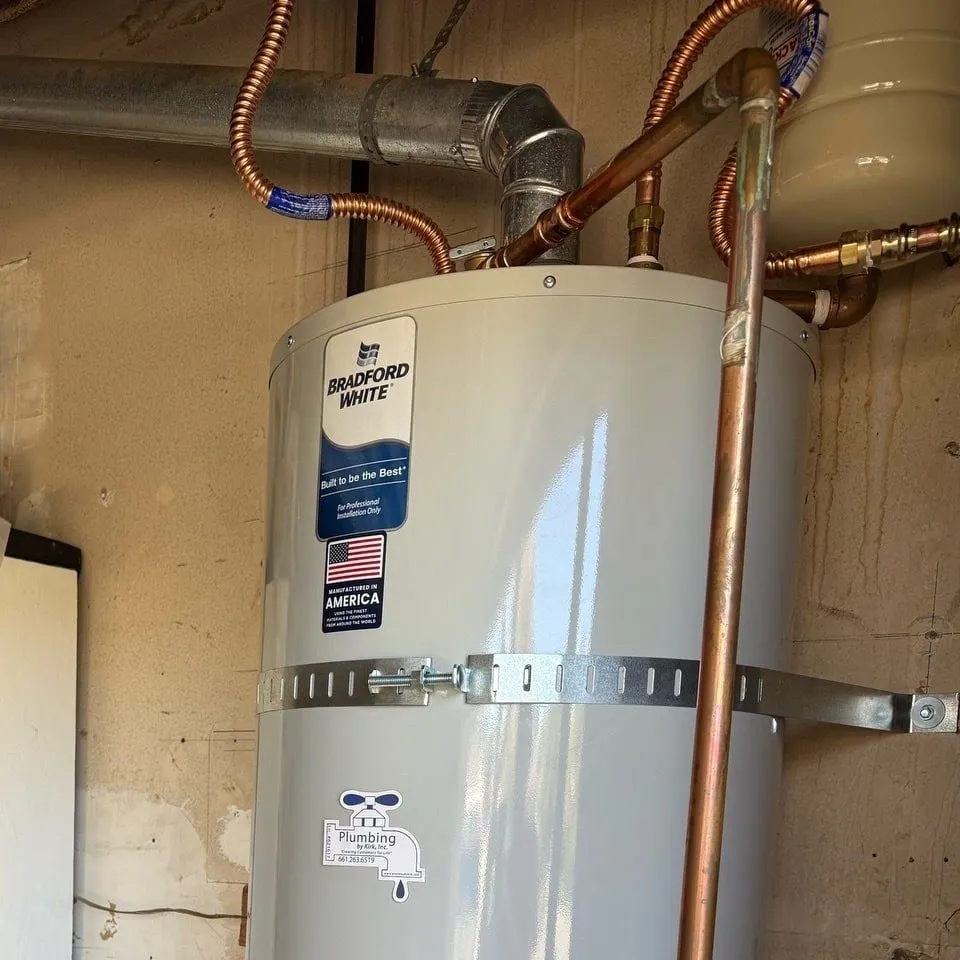
Turn the heat off and close the cold-water valve first. If a threaded fitting is only loose, a small turn with a wrench may stop it. Tightening too far can crack the fitting and make the leak worse. Dry it and watch it for a few minutes.
A fitting that keeps weeping, one with crust or corrosion around it, and a shut-off valve that leaks at its stem or won’t close fully all need replacing. Water heater repair in Santa Clarita covers the connections and the shut-off valve.
Water from the top runs down the side of the tank and gathers at its base, which is why a top leak can look like a bottom one. Check the top before you decide anything about the tank.
Water heater relief valve leaking
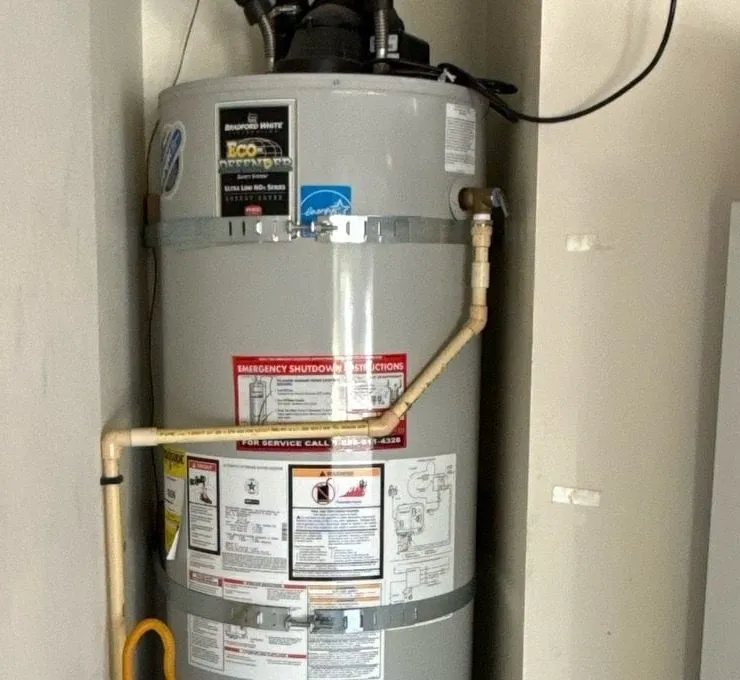
The temperature and pressure relief valve is the tank’s safety valve. It sits near the top of the tank, and a pipe runs from its outlet down to a safe place to drain. If the temperature or the pressure inside climbs too high, the valve opens and lets it off.
Water at the end of that pipe means the valve opened, or opened and didn’t close. A water heater relief valve leaking now and then can be the tank letting off expanding water, but one that leaks steadily has a cause to find. If no pipe is attached, the water lands on the heater and the floor, and a plumber can add one. The causes to check:
- High water pressure. SCV Water says pressure varies across its service area, and above 80 psi static its customer policy calls for a regulator on the home’s service line. A home whose regulator has worn out, or never had one, can see pressure high enough to open the valve.
- Thermal expansion. Water takes up more room as it heats. A check valve, a backflow preventer or another normally closed device on the house’s water line can keep the extra water from flowing back into the main, and a pressure regulator can do the same. In that closed system the pressure climbs each time the heater runs. The City of Santa Clarita’s water heater detail sheet calls for an approved, adequately sized expansion tank, or another approved device, on such a system.
- A high thermostat setting. A thermostat set high makes the water expand more and brings the tank closer to the valve’s temperature limit. The Consumer Product Safety Commission says a setting of 120 degrees Fahrenheit may be necessary to reduce the risk of most tap water scalds.
- A worn or fouled valve. A relief valve can wear out, and grit or corrosion deposits can hold it slightly open. If pressure and temperature are normal and the valve still drips, the valve is the suspect.
Never plug or cap the discharge pipe to stop the dripping. The valve is how the tank gets rid of pressure, and a capped pipe leaves it nowhere to send the water.
A worn valve is replaced. A pressure cause needs a different fix, such as a regulator, an expansion tank or both, because a new valve on the same pressure can drip the same way.
Water from this valve can be scalding. If it keeps pouring hot water or steam, cut the heater’s fuel or power only if you can do it without going near the valve, stay clear, and don’t pour cold water on the tank. Then call the shop.
Leaking from the drain valve
The drain valve sits near the bottom of the tank. It is there so sediment can be flushed out through a hose, which makes it a valve people open on purpose.
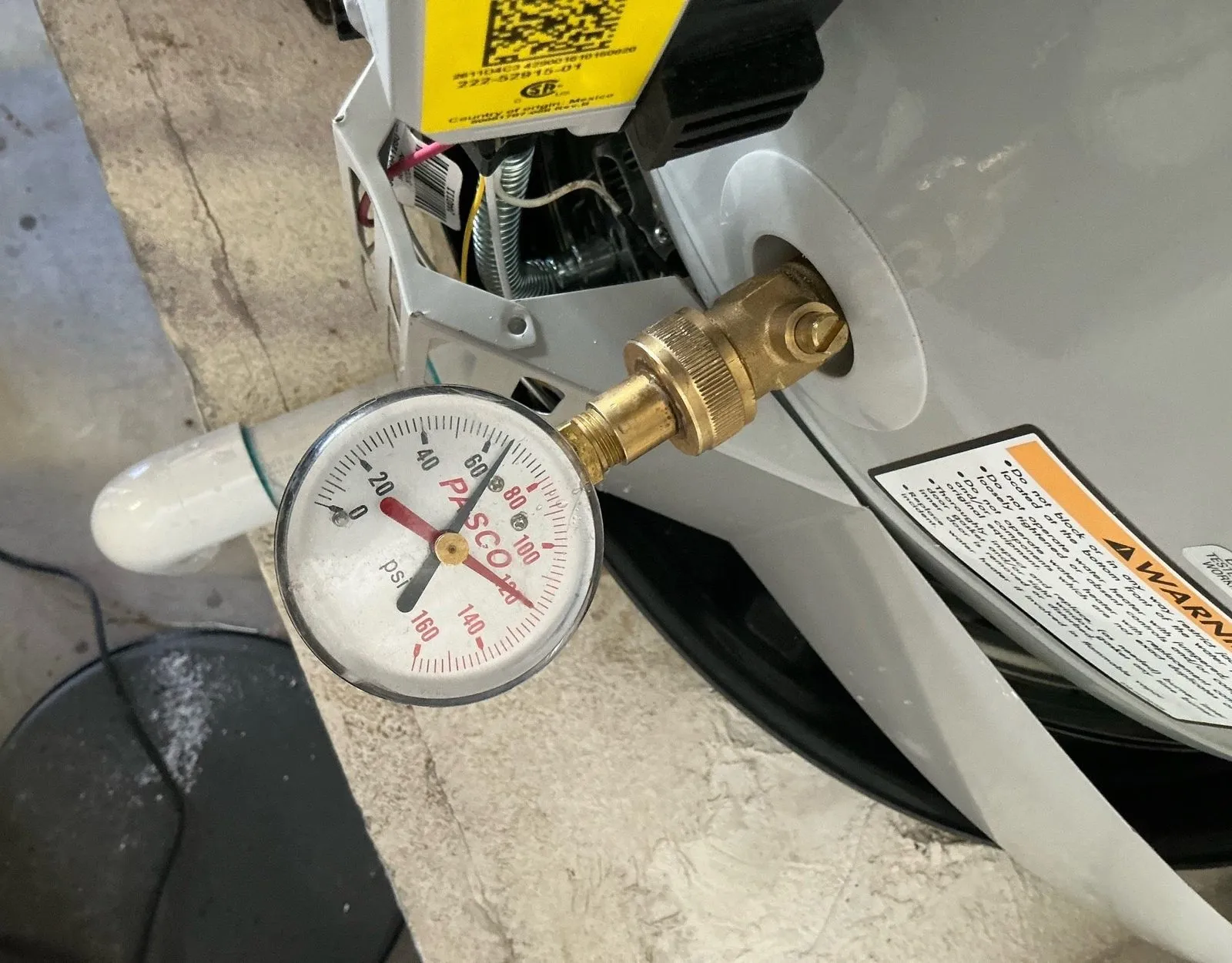
Water dripping from its spout or around its handle usually means sediment has lodged in the valve and keeps it from closing fully. Opening and closing it a few times can wash the grit out, but only with the heater off and the water cooled, because what comes out is hot. If it still drips, the valve needs replacing, and the tank can stay where it is.
Water that seeps from the tank wall around the valve’s threads, with the valve itself dry, points to the tank.
Water heater leaking from the bottom
A water heater leaking from the bottom doesn’t always mean the tank has failed. The base is where everything above runs down to, and it holds the drain valve. Check these first:
- The drain valve. See the chapter above.
- The relief valve pipe. Its outlet can end near the floor, so a drip from the valve shows up at the base.
- Water from higher up. A fitting weeping at the top can run down the jacket and pool underneath.
- Condensation. Moisture can form on a cold gas tank as it first heats and drip from under the burner. It dries up once the tank is warm.
If none of those is the source, and water keeps appearing from the base of the tank with every valve and fitting above it dry, the tank is leaking. Rust streaks or moisture at the base add to the evidence.
A tank leak usually starts when the steel corrodes through. Inside the tank, a sacrificial anode rod is meant to corrode first, and once the rod is used up, the tank itself starts to. Sediment on the floor of the tank cuts its capacity and, over time, its life, and valley water is hard, with SCV Water’s 2026 report averaging 354 mg/L in its groundwater against about 160 in its imported surface water. When hard water is heated, calcium carbonate settles out as that sediment.
A leak through the tank wall can’t be repaired, and a small seep tends to get bigger. Turn the heater off, close the cold-water valve, and start planning for a new heater.
A leaking tankless water heater
A leaking tankless water heater has very little water to lose, but the leak still needs finding. It can come from its water connections, the service valves on them, its relief valve or, on a condensing model, the condensate line. Leaks at those points can be repaired. Water coming from inside the cabinet points to the heat exchanger or the piping inside the unit.
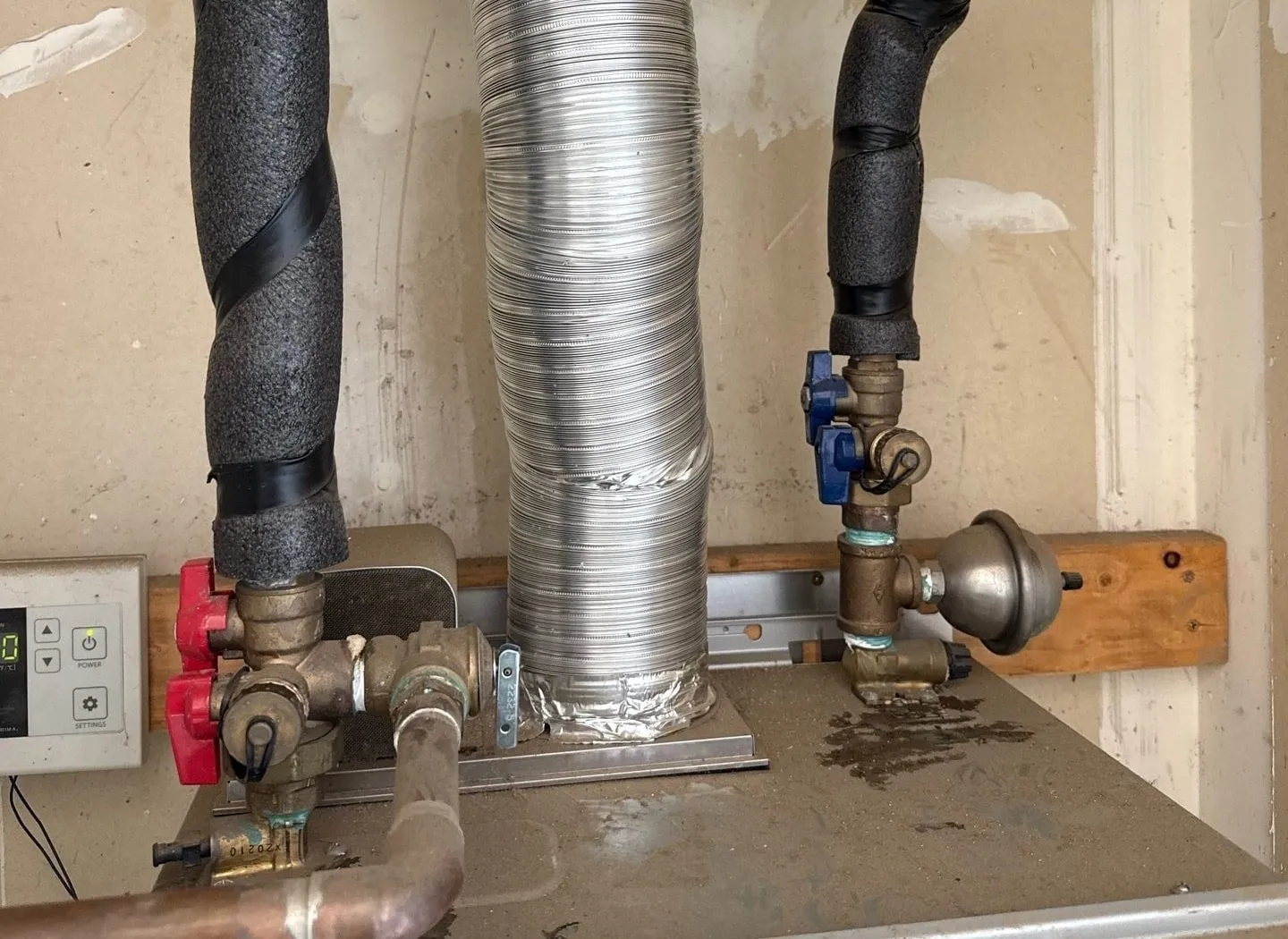
Do this first:
- Switch the unit off, and close its gas supply valve if it burns gas.
- Close the valves on its water lines.
- Leave it off until the source is found.
Many units show an error code on their display when they sense a fault. Write down the code, the make and the model before you call: codes differ from one maker to the next, and the unit’s manual lists what each one means. On a condensing model, check whether the condensate line is draining freely or has backed up. Tankless water heater repair covers the common faults. Whether a damaged heat exchanger is worth repairing depends on the unit’s make and age.
When a leak means a new water heater
Two things decide it: the spot the leak starts from, and the heater’s age.
- A leak from the tank body means replacement. Whatever the heater’s age, a tank that leaks through its wall is finished.
- A water heater leaking at a fitting, a valve or a connection is a repair. Age and condition then decide whether the repair is worth it. A part replaced on a heater well into its working life can be money spent on a tank that fails next year, so ask for the repair and a replacement to be priced side by side.
To learn a heater’s age, look for the rating label on its side. Some makers print the manufacture date there, and others fold it into the serial number as a code.
A new heater means a permit. Which office issues it depends on the property’s address. In the City of Santa Clarita, a water heater changeout is on the list of instant online permits for homes. In the unincorporated parts of the valley, LA County Public Works says a permit is required whenever a water heater is installed or replaced. California law (Health and Safety Code section 19211) also has every new or replacement heater braced, anchored or strapped against earthquakes, and the same rule reaches existing residential heaters.
Kirk’s crew replaces tank and tankless water heaters across the Santa Clarita Valley, and water heater replacement covers what a new heater involves, from the permit to the strapping. If a failed tank has you wondering about a switch, tankless vs tank water heaters lays out what changes, from the gas line to the vent to upkeep in hard water.
To have the leak looked at, request service or call the shop. Say where the water is showing up, whether the heater runs on gas or electricity, and what its label says about its age.
Sources
9 cited
- SoCalGas, emergency response and natural gas leaks (leave first, switch nothing on or off, call from a safe place), read November 16, 2026
- National Board of Boiler and Pressure Vessel Inspectors, Residential Water Heater Safety (the relief valve, the drain valve and sediment, the anode rod; originally published in 2001), read November 16, 2026
- City of Santa Clarita Building and Safety, water heater detail (the relief valve pipe and the expansion tank; revised March 31, 2010), read November 16, 2026
- SCV Water, Customer Service Policy, August 2026 (water pressure and pressure regulators, section 13.1.3), read November 16, 2026
- SCV Water, 2026 Consumer Confidence Report (hardness), read October 12, 2026
- US Consumer Product Safety Commission, Avoiding Tap Water Scalds (scald temperatures and the 120 degree setting), read November 16, 2026
- ENERGY STAR, how whole-home gas tankless water heaters work (the condensate drain on condensing models), read November 16, 2026
- City of Santa Clarita, instant online permits and LA County Public Works, water heater permit FAQ, read November 16, 2026
- California Health and Safety Code section 19211 (water heater bracing, anchoring or strapping)